
 Credits
Credits
Credits
Easter in Romania
Easter is certainly the most significant Christian celebration, and for us Romanians it means a lot, as we have a long established spiritual side of our history. From the religious perspective, it represents the Lord Jesus' resurrection from the grave. It is a long-awaited celebration after a long winter since it lines up with spring. Easter is always on a Sunday. Orthodox Easter is a national holiday that usually takes places one week later after the Catholic one.
Everyone has the day off, while schools and most businesses are closed. In the older Romanian world, the work on the exterior of the house began with Joia Mare (Big Thursday). The lambs or piglets were slaughtered, the yard and roadway in front of the home were swept and the festive clothing was prepared.
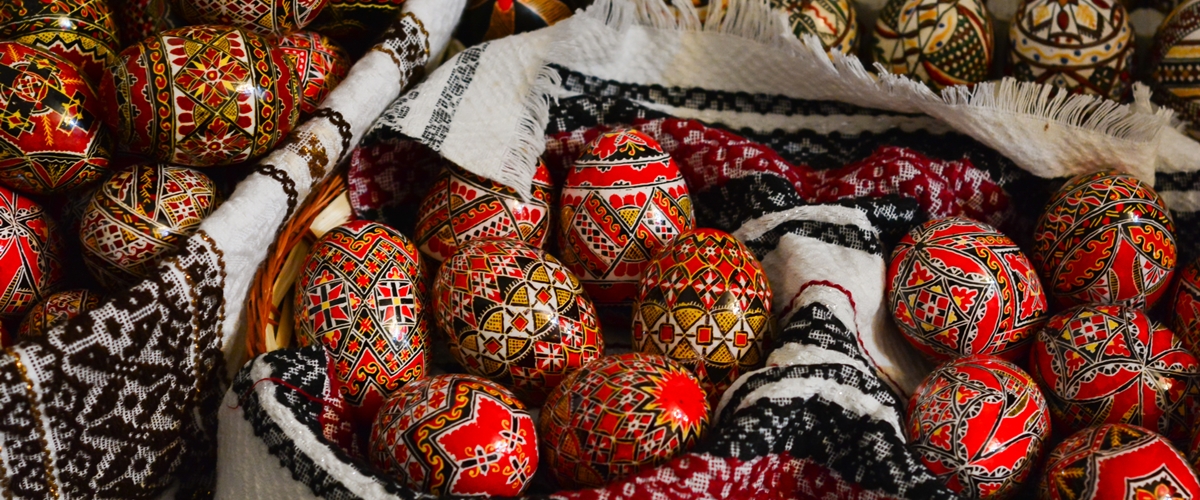
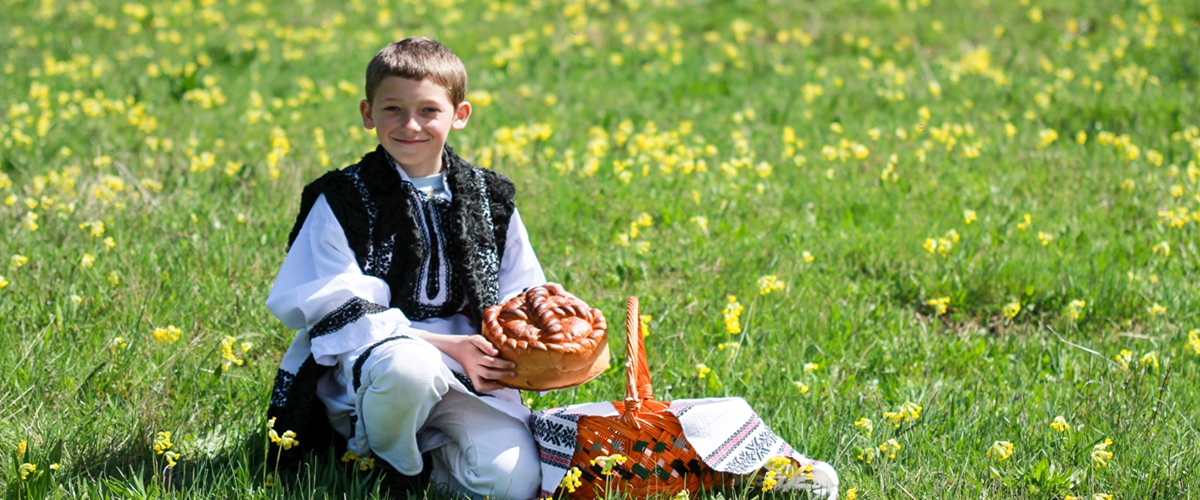
Easter services are held at many churches around Romania. Families and friends come together for an Easter lunch or dinnertime, and which includes the following foods: decorated eggs, lamb meat, especially drob (haggis made from lamb organs and vegetables), Pască (filled with cheese and raisins pound cake), another type of Cozonac, cabbage rolls, red wine. The decorated and ornamented eggs are a marvelous craft that is still kept and carefully done in regions of Moldova, Bucovina and Maramures, where you can find museums dedicated solely to them, and you can even see them being created live!
During Easter, it is usual to knock each other's eggs before eating them, and it is thought that those who do so will meet each other again after death. Red is one of the most prominent colours used to paint Easter eggs because it represents Jesus' blood when he was crucified. The Easter candles used at a religious ceremony are maintained afterward because they represent protection.
People go to church and attend the ceremony on the night of the Resurrection. One of the procession's customs is to round the church. Every member of the community holds a candle, which they burn from the priest's flame. They bring the lit candles home and they keep them lit all night long. The days following, they relax at home and cherish each other and the food they diligently cooked.
When you go into a man's house on or after Easter, you must say, "Christ is risen"( „Hristos a înviat”). The other will respond, "Truly, he has risen"( „Adevărat a înviat”)!
Adventure, bike and eco tours
Wine and gastronomy tours


.png)








Adventure, bike and eco tours
Wine and gastronomy tours